From the journal · October 25, 2026
Ayurveda and Modern Spine Care: Finding the Right Balance for Back Pain Treatment
India’s relationship with back pain treatment exists at a fascinating intersection of ancient and contemporary medicine. Tens of millions of Indians who develop back pain will consult an Ayurvedic practitioner, receive Panchakarma therapies, or use traditional herbal preparations — sometimes alongside, sometimes instead of, modern medical care. The question of whether these choices are complementary, redundant, or potentially counterproductive is one that deserves an honest, evidence-based answer rather than either uncritical endorsement or dismissive rejection of tradition.
This article examines what Ayurvedic approaches to spinal care actually involve, where the evidence supports their use, what modern non-surgical spinal medicine offers that Ayurveda cannot, and how patients who value both traditions can make informed decisions.
Related reading: Prepare useful questions for a health conversation · A clearer starting point for health information
What Ayurveda Offers for Back Pain
Kati Basti
Kati Basti — the application of warm medicated oil pooled in a dough ring placed over the lumbar region — is one of the most widely used Ayurvedic interventions for back pain. Practitioners describe its action in terms of reducing vata dosha aggravation and nourishing the tissues of the lumbar region. From a modern physiological perspective, the sustained warmth of the warm oil application increases local blood flow, reduces muscle spasm, and can temporarily reduce pain through heat receptor stimulation — mechanisms analogous to heat therapy. Some studies have shown subjective pain reduction with Kati Basti in short-term trials, though the evidence base by modern clinical standards remains limited.
Panchakarma Detoxification
Panchakarma is a comprehensive Ayurvedic purification and rejuvenation programme involving a range of therapies including therapeutic massage (Abhyanga), steam treatment (Svedana), and various internal and external interventions. For back pain management, Panchakarma is typically prescribed to address systemic imbalances believed to contribute to musculoskeletal pain. The extended rest, therapeutic touch, herbal oil application, and profound relaxation that Panchakarma involves can plausibly reduce stress-driven pain amplification, improve sleep quality, and reduce systemic inflammation — particularly in patients with chronic pain where these psychosocial factors are significant contributors.
Herbal Anti-Inflammatory Preparations
Shallaki (Boswellia serrata) and Ashwagandha (Withania somnifera) have both received meaningful scientific attention for their anti-inflammatory properties. Boswellic acids — the active compounds in Shallaki — have demonstrated anti-inflammatory activity in several controlled trials for osteoarthritis and have plausible mechanisms relevant to spinal disc inflammation. Ashwagandha’s adaptogenic properties may reduce cortisol-driven systemic inflammation. These are not miracle cures, but they are not without biological rationale either.
What Modern Non-Surgical Spine Care Offers That Ayurveda Cannot
The most significant limitation of Ayurvedic spine care is diagnostic precision. Without the imaging tools — MRI, CT, and X-ray — that modern medicine provides, Ayurvedic assessment cannot identify disc herniation, spinal stenosis, nerve root compression, spondylolisthesis, or the specific structural abnormalities that require targeted treatment. A patient who is managing what they believe to be vata-aggravated lower back pain may actually have a grade 2 disc herniation compressing the L5 nerve root — a condition that requires specific mechanical treatment, not generalised tissue nourishment.
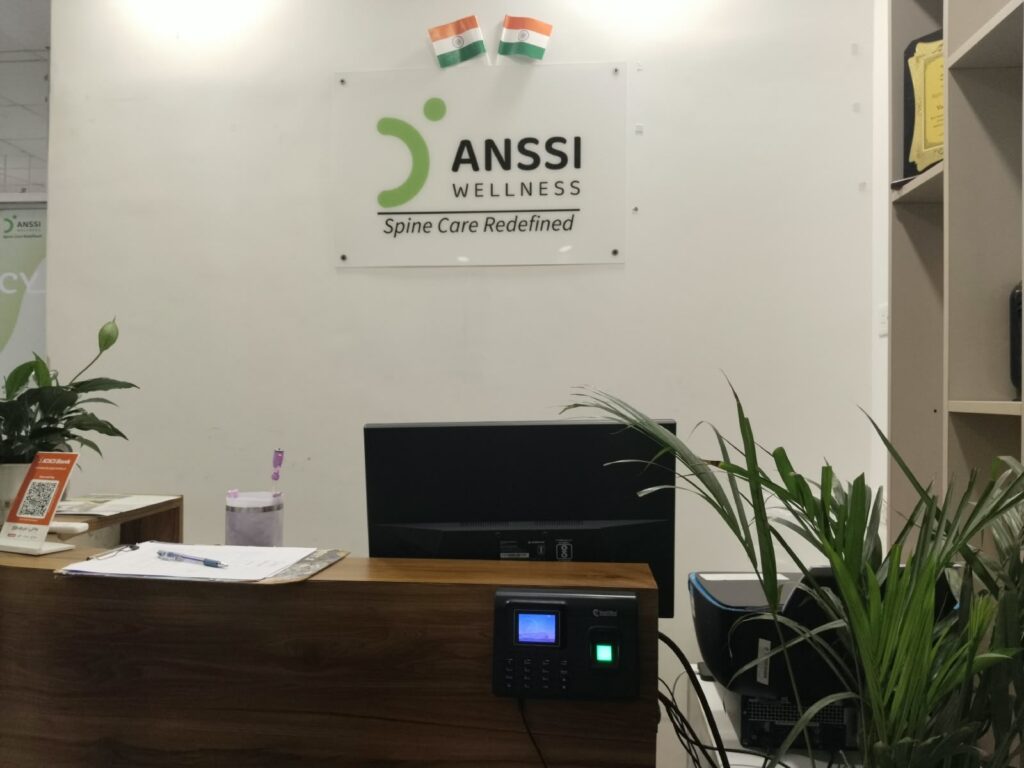
Modern non-surgical spinal care at clinics like ANSSI Wellness brings diagnostic precision, evidence-based spinal decompression and manipulation protocols, and targeted rehabilitative exercise programmes that can address structural spinal conditions with a specificity that traditional Ayurvedic practice, however valuable in other respects, cannot match.
An Integrative Approach That Respects Both Traditions
The most pragmatic position for a patient who values both traditions is diagnostic clarity first. Obtain a modern clinical assessment — including imaging where indicated — to understand precisely what structural condition exists in the spine. Use this understanding to determine whether the condition requires specific structural treatment (disc decompression, nerve mobilisation, spinal stabilisation) that only modern non-surgical or surgical approaches can provide.
Ayurvedic approaches — Kati Basti, Panchakarma, anti-inflammatory herbs — can then be used as complementary support: addressing the systemic inflammatory environment, promoting recovery, reducing stress amplification, and supporting the overall healing process. The key is ensuring that Ayurvedic care complements, rather than delays, the structural treatment that the spinal condition requires. The team at ANSSI Wellness is experienced in working with patients who are simultaneously pursuing traditional therapies, and can advise on how best to integrate both approaches for optimal outcomes.
Conclusion
Ayurveda and modern non-surgical spinal medicine are not opposing systems — they address different dimensions of the same problem. Ayurveda’s strengths lie in systemic treatment, lifestyle integration, and the reduction of inflammatory and psychosocial drivers of pain. Modern spine care’s strengths lie in diagnosis, structural treatment, and the targeted rehabilitation of specific injured tissues. For patients managing back pain, drawing on both — in the right sequence and with clear understanding of what each contributes — represents a genuinely integrative approach to spinal health.